
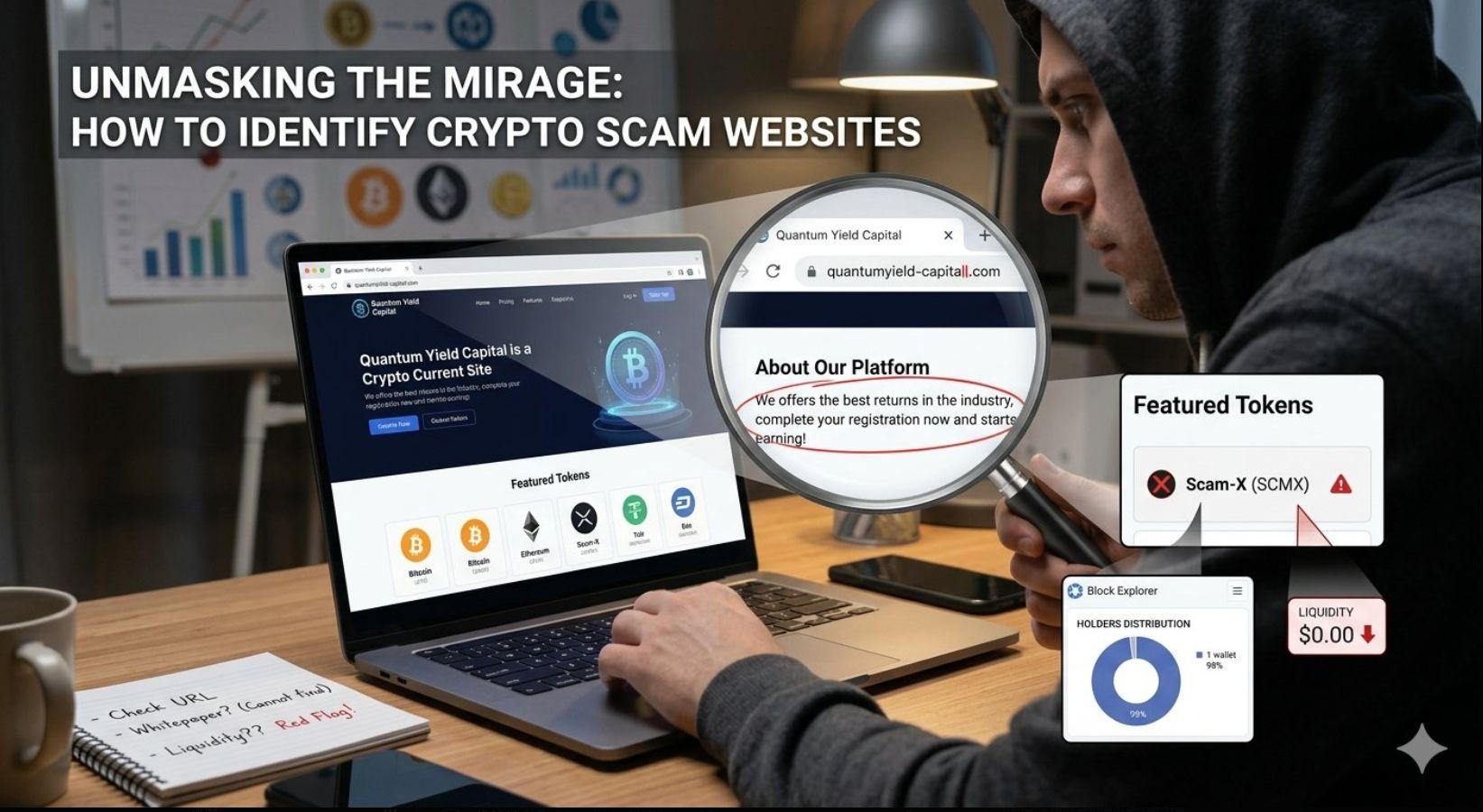
The cryptocurrency space is full of innovation, but it is also a magnet for bad actors. Scammers are deploying sophisticated tools to build incredibly professional-looking websites, making it harder than ever to distinguish a legitimate project from a highly organized trap.
Whether you are vetting decentralized assets on the Stellar network or looking for a new trading platform, you need a strict system for identifying red flags before you ever think about connecting your wallet. Here are the key indicators to look for when evaluating a crypto-based website.
1. The "Copy and Paste" Illusion
Many fraudulent platforms don't build from scratch; they clone. A scam website will often mimic the exact layout, color scheme, and user interface of a well-known Stellar wallet or popular decentralized exchange (DEX).
- The Trap: This "copy and paste" effect is designed to trick you into a false sense of security.
- The Defense: Always scrutinize the URL. Scammers will use slight misspellings or different top-level domains to capture investors who are moving too quickly.
2. The Proof is in the Prose
While visual design can be stolen, the actual copy often betrays the scam. Comb through the site's text for inconsistencies.
- Red Flags: Poor grammar, awkward phrasing, and blatant spelling errors are massive warning signs.
- Incomplete Builds: Scam sites are often rushed to market to capitalize on a trend. You will frequently find dead links, placeholder text, or "About Us" pages that lead nowhere. Legitimate developers take the time to finish their platforms.
3. Analyzing the Asset Lineup
If the website doubles as an exchange or a wallet, pay close attention to the assets they are promoting.
- The Tactic: Fraudulent sites will often list highly recognizable assets (like XLM or trusted stablecoins) alongside completely unknown, newly minted scam tokens to create an aura of legitimacy.
- The Takeaway: If the platform seems heavily biased toward promoting an obscure, unverified token alongside established coins, step away.
4. The Missing Blueprints
A serious project within the ecosystem has a concrete plan.
- Documentation: If you cannot easily locate a detailed whitepaper (or at least a comprehensive litepaper) and a clear, forward-looking roadmap, you are likely looking at a rug pull waiting to happen.
- The Motive: Scammers want your funds today; they rarely take the time to document a long-term technical vision or utility mechanism.
5. On-Chain Red Flags: Holders and Liquidity
If the website's domain is tied directly to a specific token, you must verify the on-chain metrics using a Stellar blockchain explorer.
- Top Holders: What percentage of the total supply is held by the top few wallets? If a massive concentration of tokens is held by anonymous wallets, they hold the power to crash the price instantly.
- Liquidity: Check the liquidity pools. Often, scam assets will have little to no locked liquidity. This means even if the token's price appears to go up, there isn't enough underlying value in the pool to allow you to actually sell your holdings when you want to exit.
The Bottom Line
These scam websites are getting harder to identify and increasingly clever. When in doubt, just move along. It is always better to err on the side of caution than to lose your holdings.
The Golden Rule of Crypto Security:
NEVER connect your wallet to ANY website unless you are completely confident about the website's authenticity.